Ethel Smyth and her violin sonata
🎻 Ethel Smyth and Her Violin Sonata
My recent artistic endeavors have focused on researching and presenting chamber works for violin and piano by female composers. With my long-time friend and musical partner, Vasileios Rakitzis, we've given recitals in Greece and Ireland, featuring the music of Amy Beach and Rebecca Clarke. During a series of three concerts in Limerick and Dublin, we had the opportunity to perform the Violin Sonata in A minor, Op. 7, by the esteemed British composer, Dame Ethel Smyth.
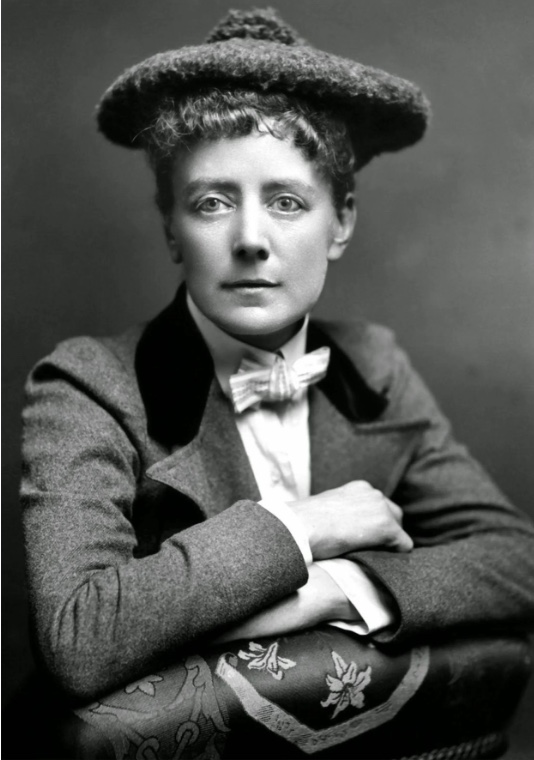
Born in London in 1858, Smyth was a truly unique public figure and artist whose life and work left an indelible mark. While her comprehensive biography is a fascinating read, I want to focus on what made her so remarkable, as well as share some insights from my recent work on her violin sonata.
For those who want to learn more about Smyth’s life, you can visit the website: www.ethelsmyth.org. You can also read her memoirs “ Impressions that remained”.
📣 A Voice for a Cause
As a public figure, Smyth is most notable for her prominent role in the Suffragette movement. Around 1910, she met the movement's leader, Emmeline Pankhurst, and was so inspired by her vision and ideas that she put her musical career on hold for two years to dedicate herself entirely to the cause. It's worth noting that her father, although a high-ranking military officer and a very conservative person, was an early advocate for the enfranchisement of women.
Her commitment led to action, and action led to consequences: Smyth was sentenced to two months in Holloway Prison for her activism. But even behind bars, her artistic and rebellious spirit shone through. In one of the most famous anecdotes of the movement, Smyth famously conducted her iconic "March of the Women" from her cell window, using a toothbrush as a baton, while fellow suffragette prisoners sang the anthem in the yard below.
Musical Influences
As a composer, Ethel Smyth was deeply influenced by the Romantic German tradition, particularly the music of Brahms, Grieg. In her mature works, however, she displayed a different style, incorporating neo-classical elements and rhythmic innovation.
🎼 The Violin Sonata in A minor, Op. 7
Let’s focus now on the Sonata which Smyth dedicated to her close friend Lily Wach (née Mendelssohn-Bartholdy). The daughter of the composer Felix Mendelssohn. Notably, it has been praised by some critics for a "very Brahmsian writing" in the piano part, featuring "dark harmonies and an opulence that is worthy of Brahms.” Some other critics however said that the piece “was devoid of feminine charm and therefore unworthy of a woman”. A remark she was so often to hear.
The only published edition is by Universal Edition. The manuscript, which I have not yet had the chance to examine, is housed at the British Library. I plan to provide updates once I lay eyes on it.
A careful study of the published score alone suggests that the edition may require closer editorial scrutiny. Performers encountering the work should be mindful of several discrepancies and inconsistencies between the violin and piano parts that necessitate resolution during preparation.
For example:
- Movement I, Bar 17-18: The note B in the violin part is written as a quarter note slurred to an eighth note in the next bar. However, in the piano score, the B in bar 18 is written simply as an eighth note, causing a mismatch.
- Movement I, Bar 18: Similarly, the D sharp is written as a quarter note in the violin part but an eighth note in the piano part.
- Movement II, Penultimate Bar: A crucial sixteenth note is present at the end of the bar in the piano score for both instruments but is missing from the separate violin part.
- Movement III (Slow Movement): Four bars before the Allegro, the written double-stop is incorrect; the correct interval should be G-E, not A-E.
Structure
The structure of the sonata largely adheres to the traditional four-movement sonata form, with a minor, though not rare, exception: the Scherzo (Second Movement) precedes the Slow Movement (Third Movement). Furthermore, the slow movement is notable for being interrupted by a middle fast section which is also interrupted by an improvisatory passage.
💡 The Movements
1st Movement: Allegro Moderato
The first movement is cast in sonata form, with the exposition extending until the repeat. This is followed by a development section that leads into the recapitulation starting at bar 145. A general characteristic woven through almost all the movements is the pervasive use of two-against-three rhythmic patterns between the violin and the piano, which contributes to a rhythmic complexity and a restless, dynamic character.
2nd Movement: Scherzo Allegro Grazioso
The scherzo takes on a playful character as expected, though some times it gets in to a darker tone especially in the short development section. It features a dialogue where the two instruments take turns presenting the thematic material while the other provides the accompaniment.
3rd Movement: Romanze Andante Grazioso
The third movement, written in E minor, serves as the sonata's slow movement and contains a very interesting programmatic note: "Dante Inf. V. 121." This refers to Dante's Inferno, Canto V, verse 121, which describes the second circle of hell where the lustful are punished by being swept about in a violent, dark storm. The movement's song-like main melody is disrupted by an Allegro section with a distinct folk character. This folk interlude is, in turn, interrupted by a quasi fantasia section featuring rapid triplets on the vioin. It's highly probable that these triplets are intended to represent the aforementioned violent, dark storm.
4th Movement: Finale Allegro Vivace
The final movement returns to the home key of A minor. In this section, Smyth makes extensive use of syncopated rhythms in both the violin and piano parts. However, the syncopation in the violin isn't always immediately obvious. For example, in bars 11 and 12, slurring the two middle eighth notes, clearly reveals the intended syncopation. Smyth also continues the technique from the second movement by creating clear dialogues between the two instruments. Furthermore, in the section between bars 124-170, she once again incorporates folklore melodies; these melodies become dramatically intensified before they ultimately return to the initial theme.
✨ Final Thoughts: A Neglected Masterpiece
In a time that certain pieces of past centuries have established their place in today’s concert halls and performers are exploring or commissioning new music, I believe we must give some space to compositions of the past that have been neglected for several reasons.
Ethel Smyth’s Violin Sonata clearly falls into this category and warrants increased recognition from both music editors and elite performers. As a work of fine craftsmanship, it merits inclusion in the standard duo repertoire.
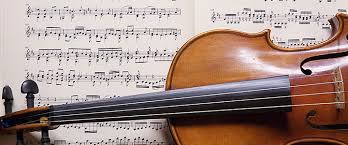
In the link below, you can watch the first movement of the sonata, as performed by Vasilis and myself at the always welcoming Mary Immaculate College in Limerick. I should mention that the violin I am playing in this concert was crafted by the great maker Alberto Cassutti from Padua. I plan to dedicate my next article exclusively to this wonderful instrument.